Dance like somebody's watching
A life of glitz on the Vegas strip

A reminder that I record all my Substacks, so you can listen to them by pressing play above if you don’t feel like reading.
Last year I watched The Last Showgirl with Pamela Anderson. I recently became interested in the ex Baywatch sensation, after I saw the controversial series about her rocky marriage to rockstar Tommy Lee. Then I realized she was attending fancy celebrity events not wearing makeup, and I thought she was cool as hell! Given her earlier years as a bombshell of lust, her new age-accepting look intrigued me.
The film is great. Pamela plays an older showgirl, Shelly coming to terms (or not) with her fading beauty, her lack of talent, and her abandoned responsibilities while she pursues a life of glitz on the Vegas strip. If there is a moral to the story it is: maybe not everyone should chase their dreams. It’s a good movie, and there’s plenty to unpack, but for this week’s Substack I want to talk about the idea of being seen, the idea of being a sex symbol.
Shelly regularly dances her routine in front of the mirror or in parking lots or wherever. It’s not limited to the Razzle Dazzle Club. She doesn’t dance to learn new moves, rather it’s because she enjoys the feeling dancing gives her. She feels beautiful, to herself and to the invisible ever-present male gaze.
Britney Spears’ Instagram is mostly her dancing sexily in front of the camera, her eyes locked to her 42 million followers. People have described it as cringe; it’s hardly anything like her show-stopping performances for MTV or the Grammys of the past. It’s raw, repetitive, weirdly cut and unprofessional. I hear the haters, “this content is a sign she should go back under her father’s conservatorship!” I can’t agree and, also, I can’t look away.

I was reading about Swedish pop artist Robyn’s new Sexistential album and how all the singer wants to do in her mid 40s is feel horny all the time. As a teenager I had (and loved) her debut album Robyn is here. Later in my early 20s I heard her song “Dancing On My Own” in the Girls soundtrack. I instantly loved it. I felt like she was singing to me personally, to every heartbreak and unrequited desire I’d ever felt. The song perfectly captures how hard being seen is once you’ve been rejected. But still we dance.
People are highly incentivised to move when they can control and curate how they’re seen; think of how many dancers there are on TikTok. But no matter how hot you look dancing, part of some viewers’ fascination is cruel judgement and disdain. If a young woman presents herself provocatively, some will judge her for being shallow. If an older woman presents herself provocatively, some will judge her for trying to be young.
Some feminists roll their eyes at attention hungry women, regardless of their age. I take their point. I see why it can be problematic. Yet part of me feels defensive of Robyn, Britney and Shelly. The world loves to remind women they have an expiration date for being seen and especially being sexy. The 2020 Super Bowl halftime show with Shakira in her 40s and J. Lo in her 50s made me and plenty of other women feel empowered and hopeful. Look, you can be sexy for as long as you want… or at least until your mid 50s. Look, you can writhe joyfully at any age and receive praise from a stadium of 70,000 people plus the entire world watching at home.
I understand critics who see these stunts as just an immature desire to satisfy male expectations. I worry that I am watching these women AND MYSELF through the male gaze. No matter how cool I think Robyn is owning her horniness in her 40s and J. Lo is wrapped around a pole in her 50s, there is an unspoken awareness that this is what the stereotypical straight man wants.
The end of The Last Showgirl is bleak. The same might be true for any aging sex symbol as she grapples to define herself beyond her youth. Women sex symbols will never be seen by the world as anything other than who they were when they were young.
But sex symbol or not, does anyone get to fully control their own narrative?
I post a lot of myself on the internet. I do a lot of performance poetry, and I put up yoga videos on Instagram. I love being in front of a crowd, real or imagined. I have a feeling I’ll do this until I die.
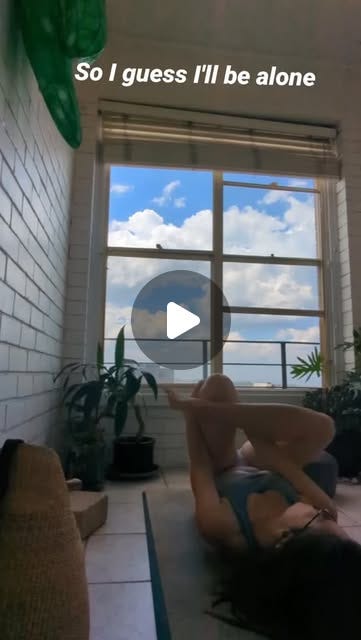
I could never condemn people for spending their life wanting to be seen. (This Substack is even performative in nature, no? I want to read as well.) There’s a performative nature in not only doing the activity you love but sharing it that opens you up to vulnerability. It opens you up to criticism that may sometimes be warranted. Hate-watching is a very real thing.
No matter how pure our intentions, we can’t control how people decide to see us.
As is often with my Substack, I have more questions than answers. Here they are:
- Is dancing like nobody’s watching more noble than dancing like somebody’s watching? Is the intention more pure?
- Some night clubs make patrons put their phones away so people can dance freely, without being filmed. Has dancing been corrupted by the attention industrial complex?
-Is the male gaze inherently bad?
- What even is the male gaze?
- Did a woman come up with the concept? (yes)
- As my partner pointed out, how many men are watching these women compared to women watching these women?
- Are more women watching these “sex symbols” than men? (Probably, although some are hate-watching, no doubt.)
- How long does a woman get to be a sex symbol? (A man gets his whole life.)
- Is it wrong to seek validation?
- Is it bad to live your life wanting to be seen?
- Is it bad to live your live wanting to be desired?
- Is it bad to live your life wanting to be seen and desired at the exclusion of all else? (Probably)
- Is it that bad to be shallow?
- Is it bad to want to be forever young?
- Is wanting to be seen just a typical experience of the life of a performer? Am I overthinking this? (probably)
- Has social media created more performers than ever before? And if so is this bad?
Let me know what you think!
I have no answers, but love these questions! xSu
As a man, but also as person deeply involved in this concept of performance mentioned, I personally think it’s a never ending chase. It’s a game of diminishing returns. In any other moment in history, Britney Spears would not have access to millions of people’s attention nor would Robyn. They would have had to accept that their avenues they could perform at were increasingly smaller. I don’t think it’s necessary to frame this as a men vs women thing. I think that people that need external validation are kind of sad. All we need is family friends and community. And at any other time in history, you simply couldn’t have more than that, unless you had legitimate talent or legitimate fame.
I’ve hated seeing Ai being integrated into social media, but a part of me has loved it, because hopefully it will help some people with “influence” start to realize how insignificant they are. 8 short years ago, influencers competition were other people, now it’s also pixels generated by a machine.
I think that the need to feel sexy, is highly superficial. I think that not needing this at all, is a far better way to age. Being recognized for accomplishments is also a game perpetually fleeting in nature, but in the probable event that someone loses, they will at least still have their accomplishments. Not needing external validation is a privilege that most people don’t contemplate cultivating, but those that do, have my respect and admiration.