Good Old New Orleans
beyond the beads and Bourbon Street

A reminder that I record all my Substacks, so you can listen by pressing play above if you’d prefer not to read.
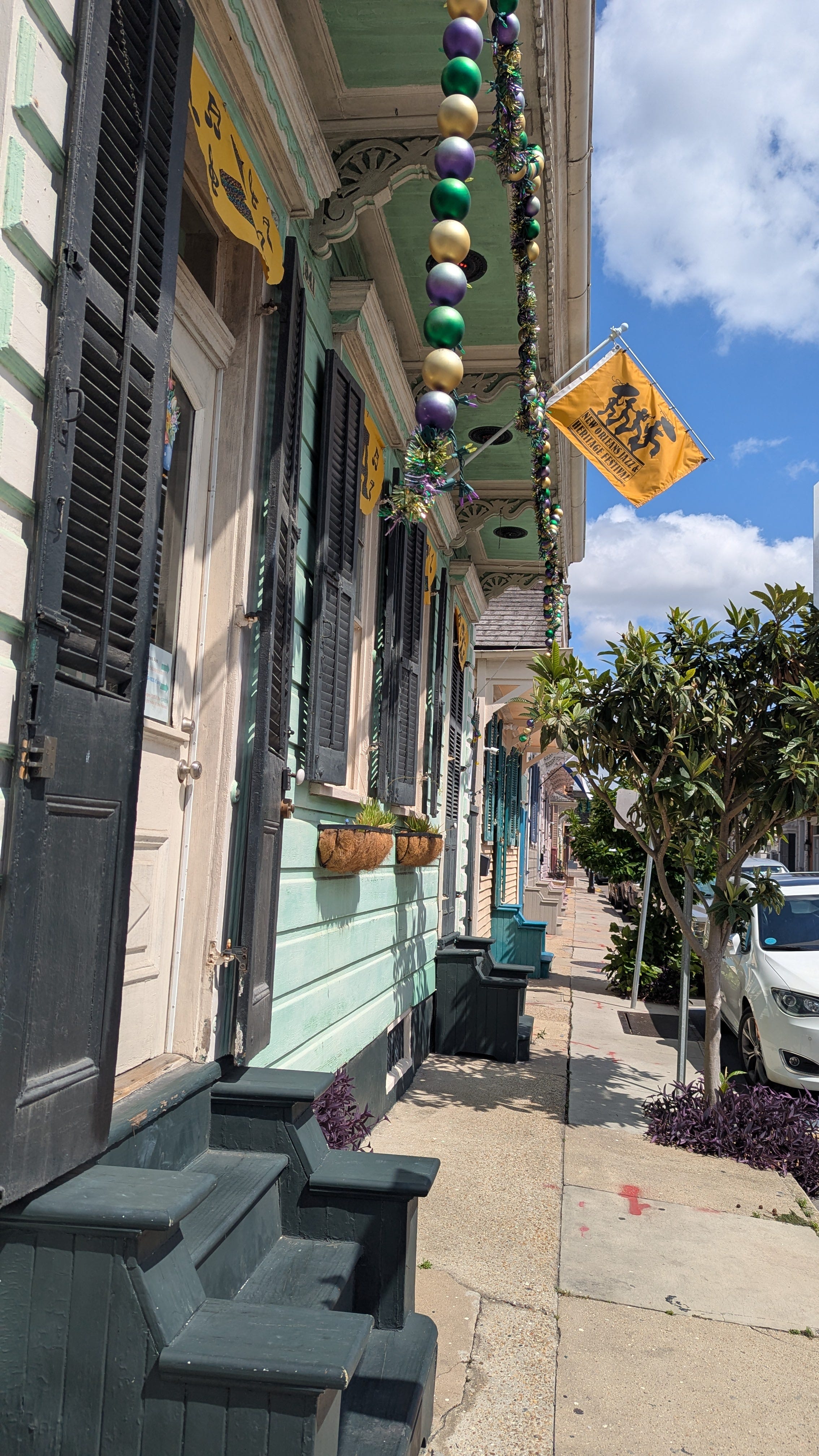
In the bayous, the bars and the mausoleums of deep Louisiana dwells a spirit different from everywhere else in the US. It hangs like the Spanish moss on the oak trees and the beads on the balconies. It lights some folks up like the hand-crafted gas lanterns that still burn every night. It’s the architecture, the distinct sounds of horns from both street performers and steamboats, the reverence towards spooky, vampires and voodoo, the dedication to debauchery, the French phrases, the courtyards, the cameras on every street corner, the National Guard walking in threes, the strong police presence, the intoxication, the disorder, the downtrodden, the trolley cars and relatively reliable public transportation that gets you further than any other southern public transit system will. I was there for ten days this last time, partially because I had a press pass to Jazz Fest, partially to see girlfriends, and partially because I love how, in this city, I can sit on a park bench for hours smelling the heavy jasmine just watching, watching, watching.
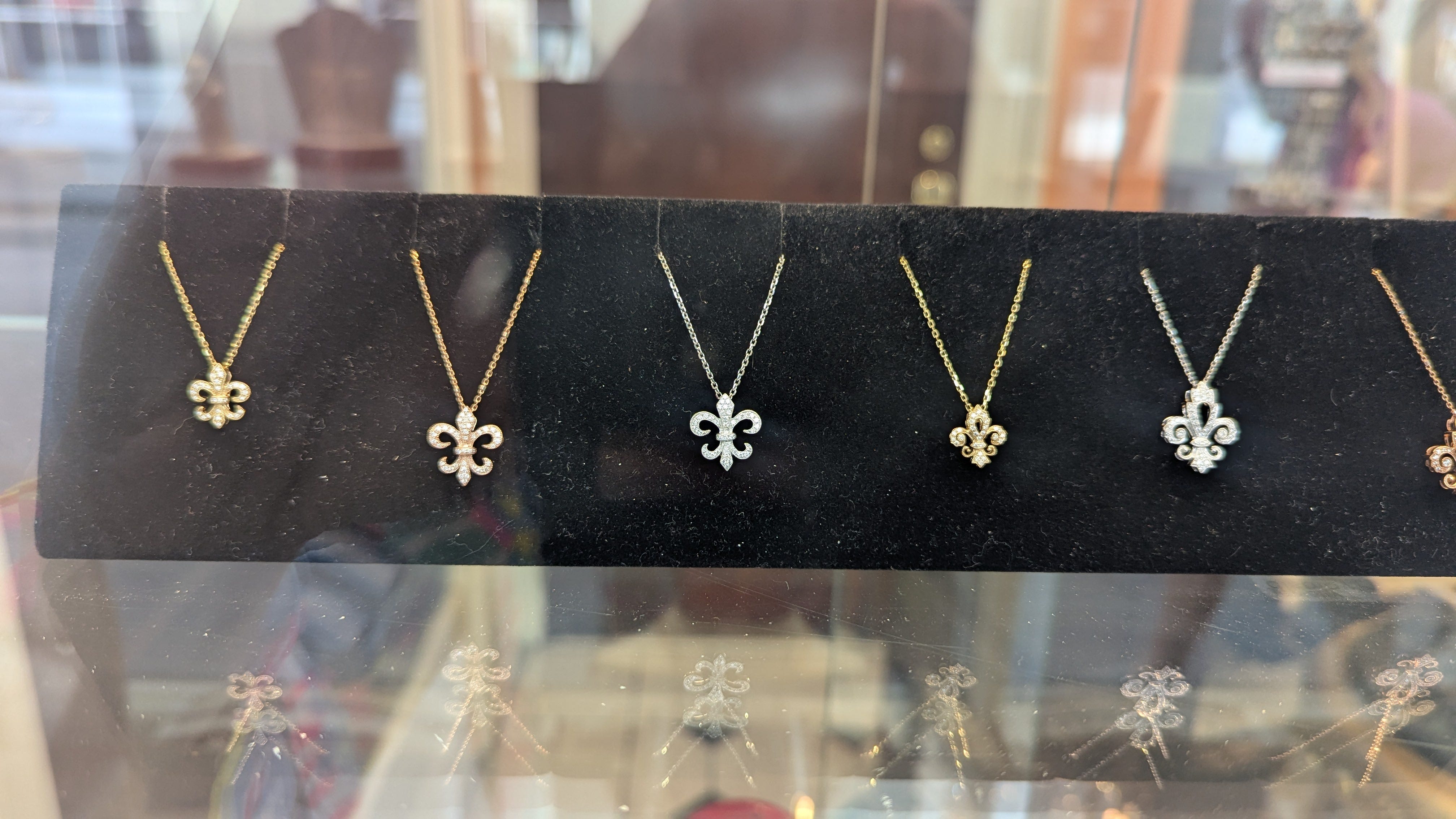
How many times in one day will you see the Fleur-de-lis of French royalty, as you stroll down the old, strange-to-pronounce streets of the most populous city in one of the poorest states in America?
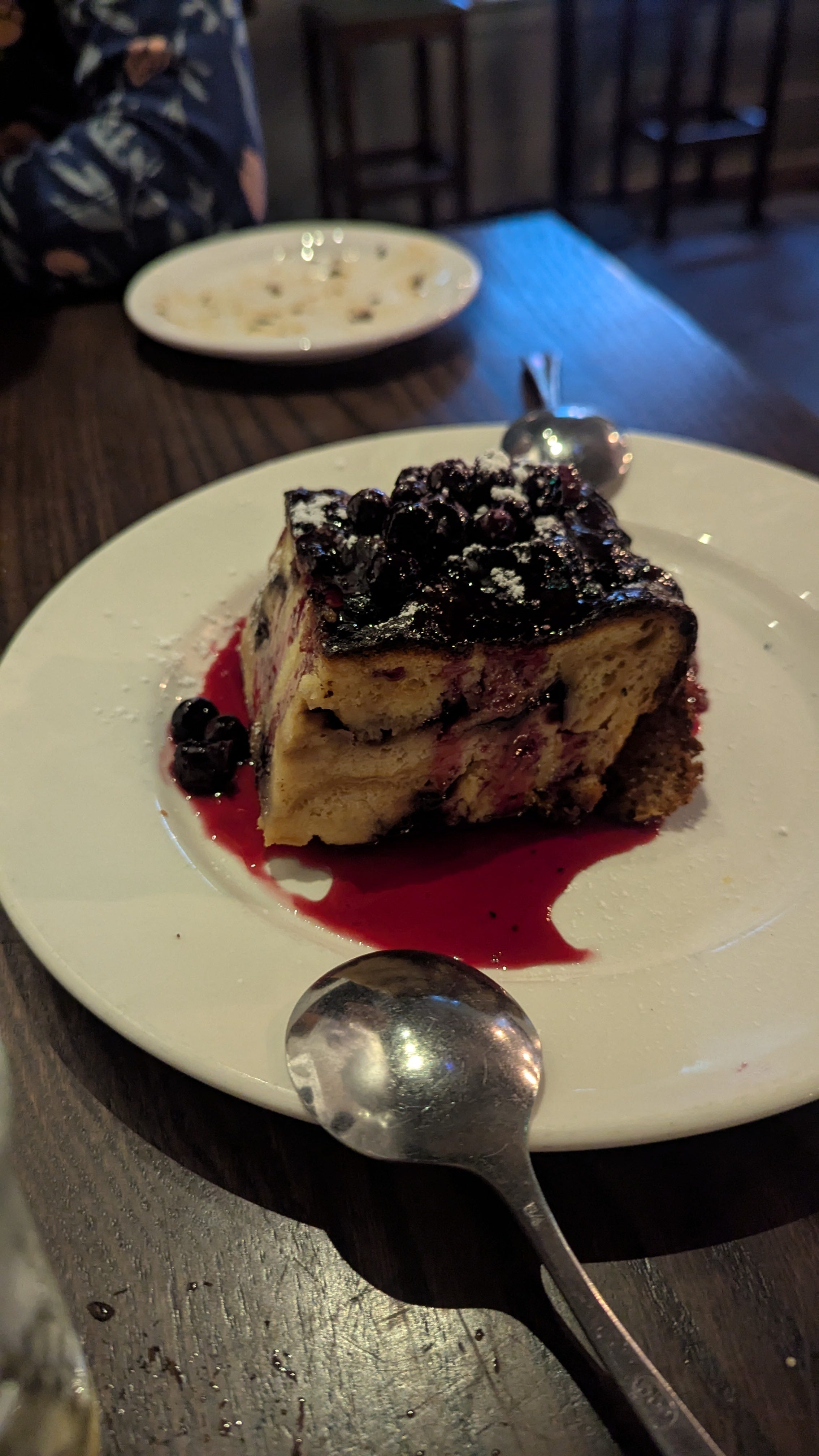
I know, I know I sound like the most stereotypical of tourists. Last week was my third time here as an adult, and the novelty is yet to wear off. After nights of sitting on barstools sipping Sazeracs and eating fried pickles and bread pudding, I can see how the tourists could easily get on locals’ nerves.
So many things beyond Bourbon Street intrigue me. Separate Substacks will come dedicated to the art galleries and then the musicians.
In 2023 when I turned 36 in New Orleans alongside having my own private birthday party, I met up with a local woman who worked with at-risk youth. A drink with her on a picturesque white-columned porch reminded me that the charms that seduced me personally are completely out of reach to many people who actually live around here.
During my visit this time around, I watched a reality TV show in my hotel room on Sunday morning called “Louisiana Lockdown”, all about the lives of inmates and staff at Angola, America’s largest and most notorious maximum-security penitentiary, located in Louisiana. I learned that for many men growing up in this State, going through Angola was a right of passage. Fascinated and sad, I wondered about the ethics of producing the show and if it was popular around here. Part of me wondered if this might be something positive, deterring future people from getting locked up. Part of me worried I was watching it for the wrong reasons.
The show came out over ten years ago, but Louisiana is still the second most incarcerated state per capita in America, just after Mississippi.
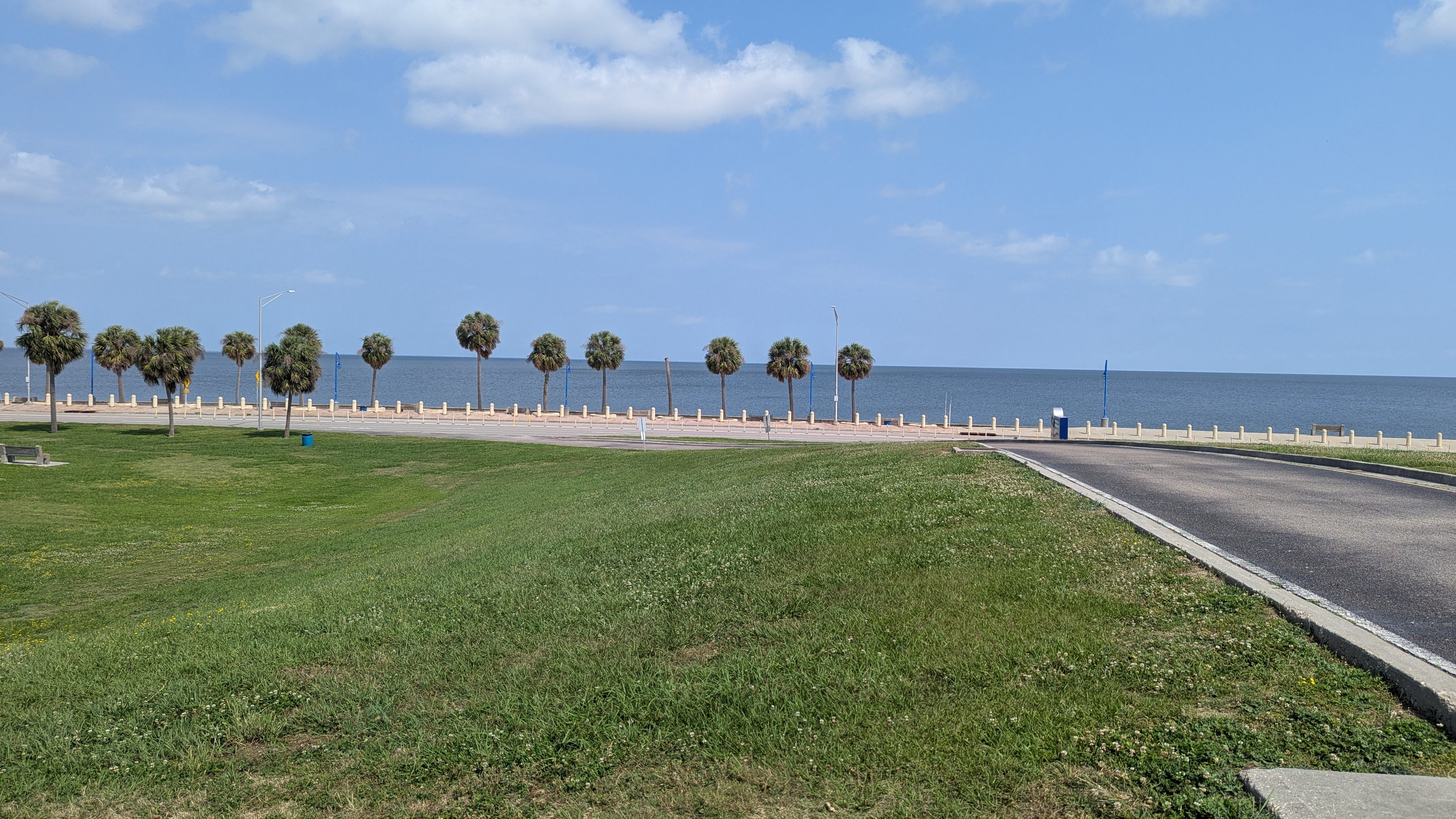
The experience of riding the bus to the University of New Orleans was just as interesting as the pretty campus and the classes I sat in on. Never have I seen so many people with visible disabilities regularly board the bus or the trolley, and also with such willing and compassionate drivers who helped buckle people in and assist them. I have read that time slows down in New Orleans, and it’s apparent in the way the public transport drivers halt everything to make sure people get on and off okay.
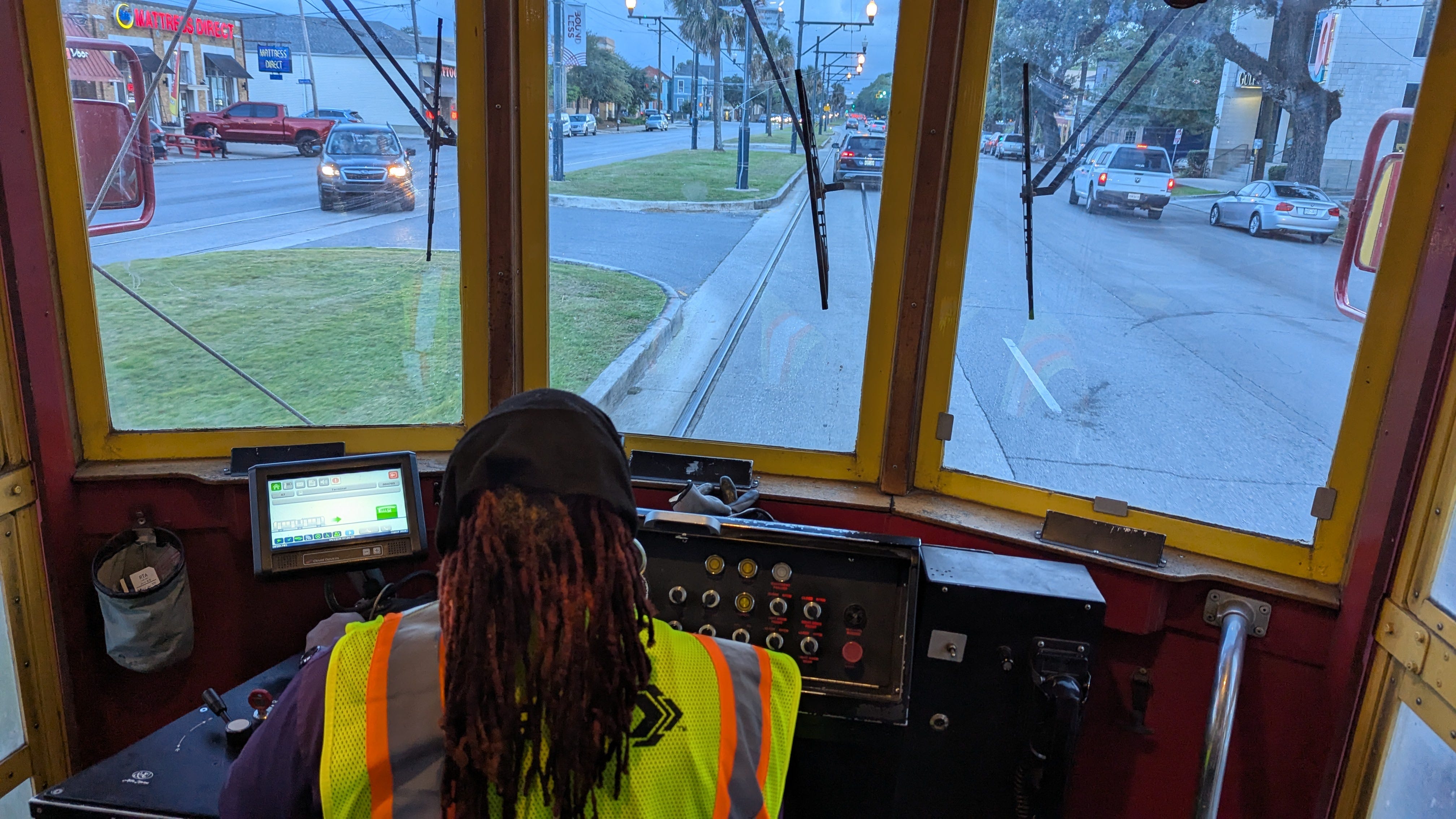
On my way to Jazz Fest Friday morning I got the trollies and buses confused and rushed across the street to try to get the correct bus. I waved emphatically while crossing the street, but the bus driver ignored me. A kind young woman crossing the street beside me saw my distress and screamed out at the top of her lungs, “HEY, WAIT FOR HER!” The bus slammed on brakes and let on a grateful Alex. “Thank you so much,” I said sheepishly to the driver.
“I see you had somebody vouchin’ for you,” he said with a grin nodding at the girl.
I chatted with anyone who would let me, from the guests by the pool (also in for Jazz Fest) to the people behind the counters of restaurants, bars and liquor stores, who seemed generally less enthusiastic about having a heart-to-heart, with the exception of one long-bearded man at a liquor store. He explained to me in detail how he was recovering from a black eye he received last week from a “hoodrat” who came into his store. My mouth dropped as I listened to his recount, how he doesn’t usually believe in hitting women but after the third time she attacked him it was very hard for him to restrain. By the time the police came she and her crew were gone, and he showed me his patched up glasses she’d stomped on the floor. I asked him if he was okay. He shrugged as he bagged my wine, “what can ya do?”
I browsed $120 rooster feather earrings and bejewelled cowboy boots that would make Dolly Parton jealous. Oh how friendly people are when they think you might buy their product. I came to New Orleans with a budget for booze and beignets and that’s about it, but at a night market on Frenchman Street a woman with the most glittery lips I’d ever seen told me that I could either buy her sparkly lipstick or the book she was also selling about her and other Black women’s stories, Sister to Sister Black Women Speak to Young Black Women. My heart cracked and my cheap resolve failed as I handed her the cash and she handed me the book, which she kindly signed. Later that night my girlfriend Laura and I sat at a nearby bar taking turns reading snippets of the book while a band also played.
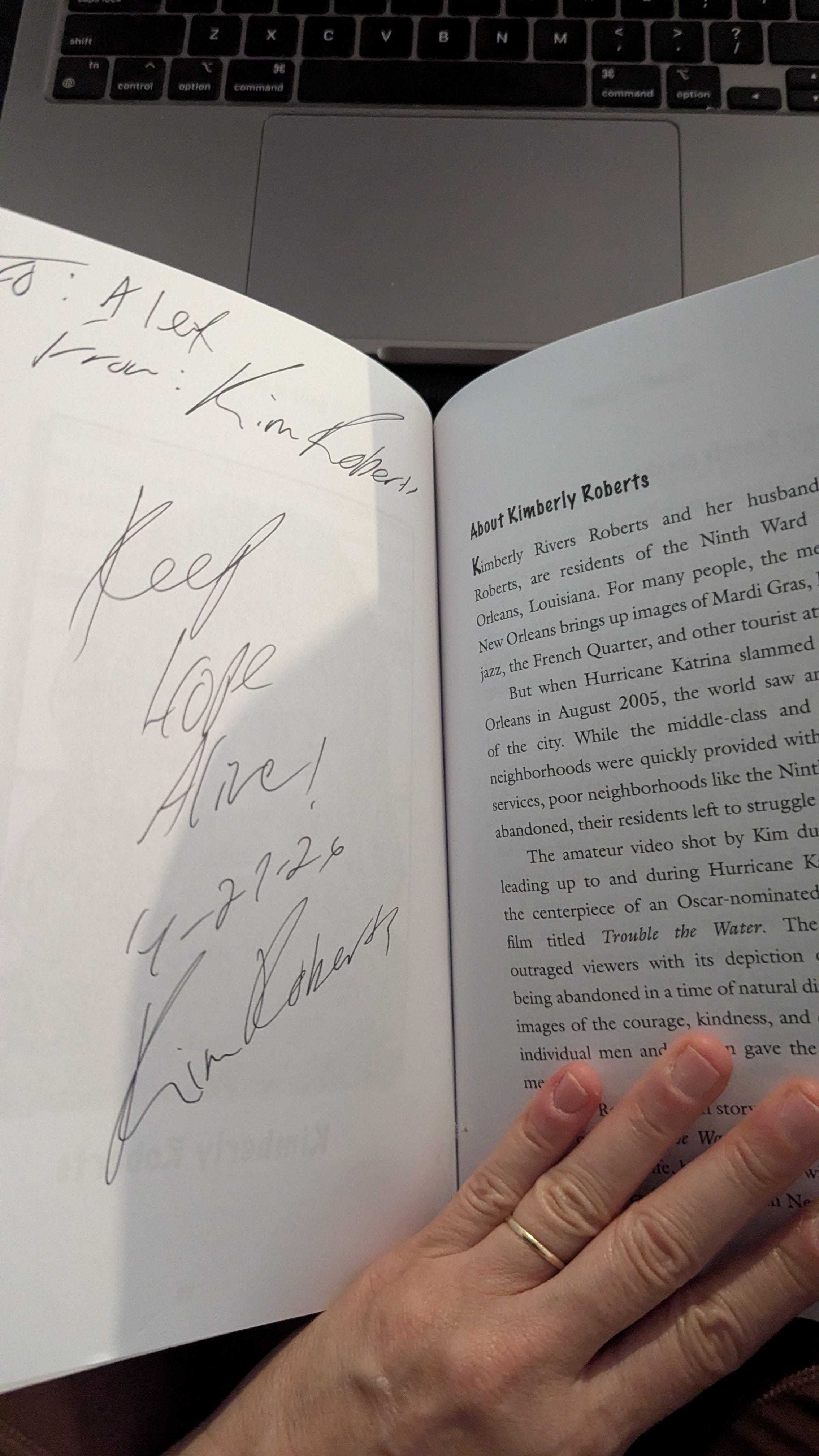
“This is so sad.” she said while she read.
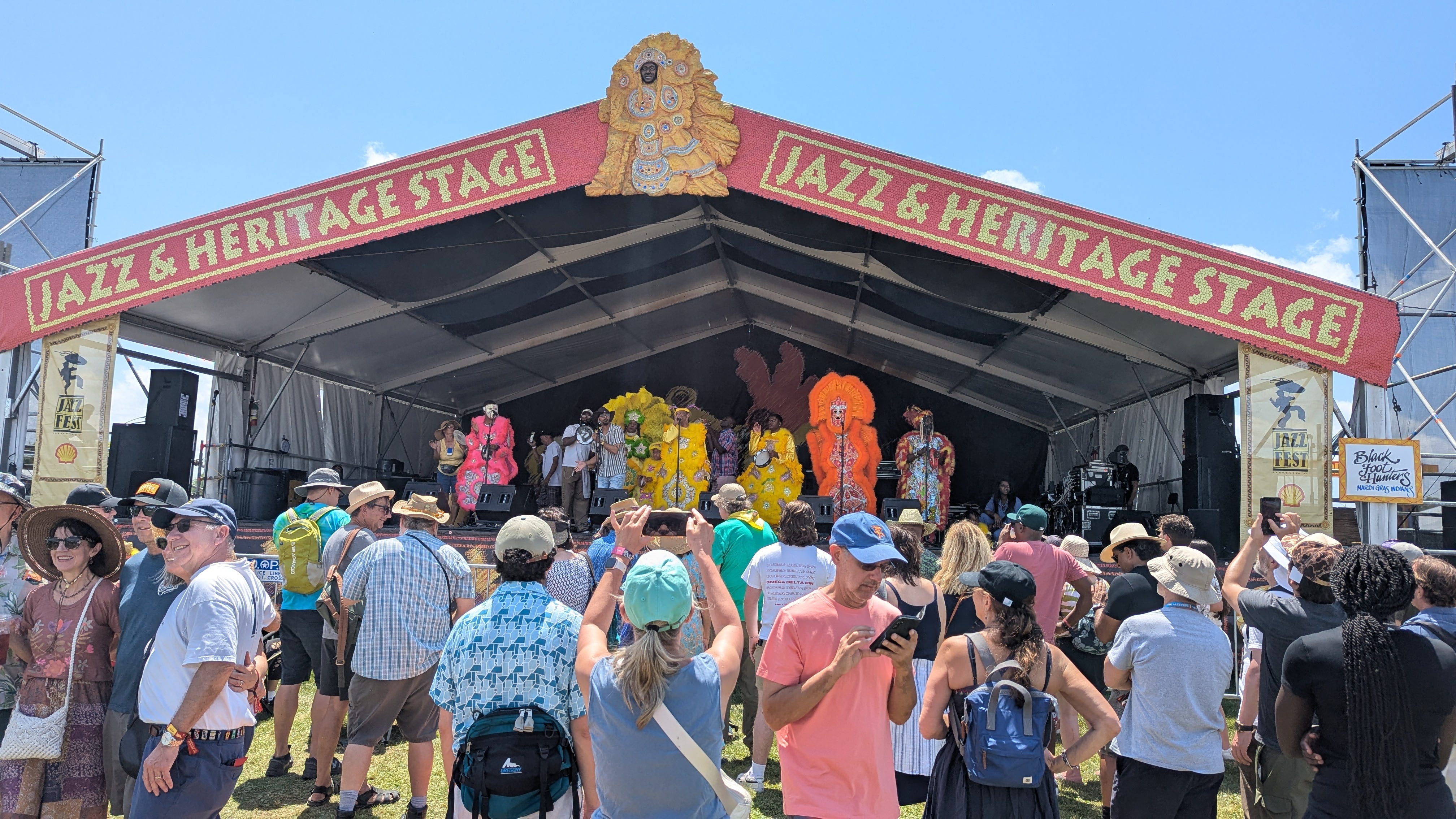
But there is clearly joy, of course! If I ever became a musician, New Orleans would be the first place I would move. Jazz Fest was an educational experience in and of itself, introducing me to the music of New Orleans, not just better familiarizing me with the big headliners like Jon Batiste, but also the choir groups from the Gospel Tent or the deeply respected acts like the Mardi Gras Indians who performed several times at the Jazz & Heritage stages.
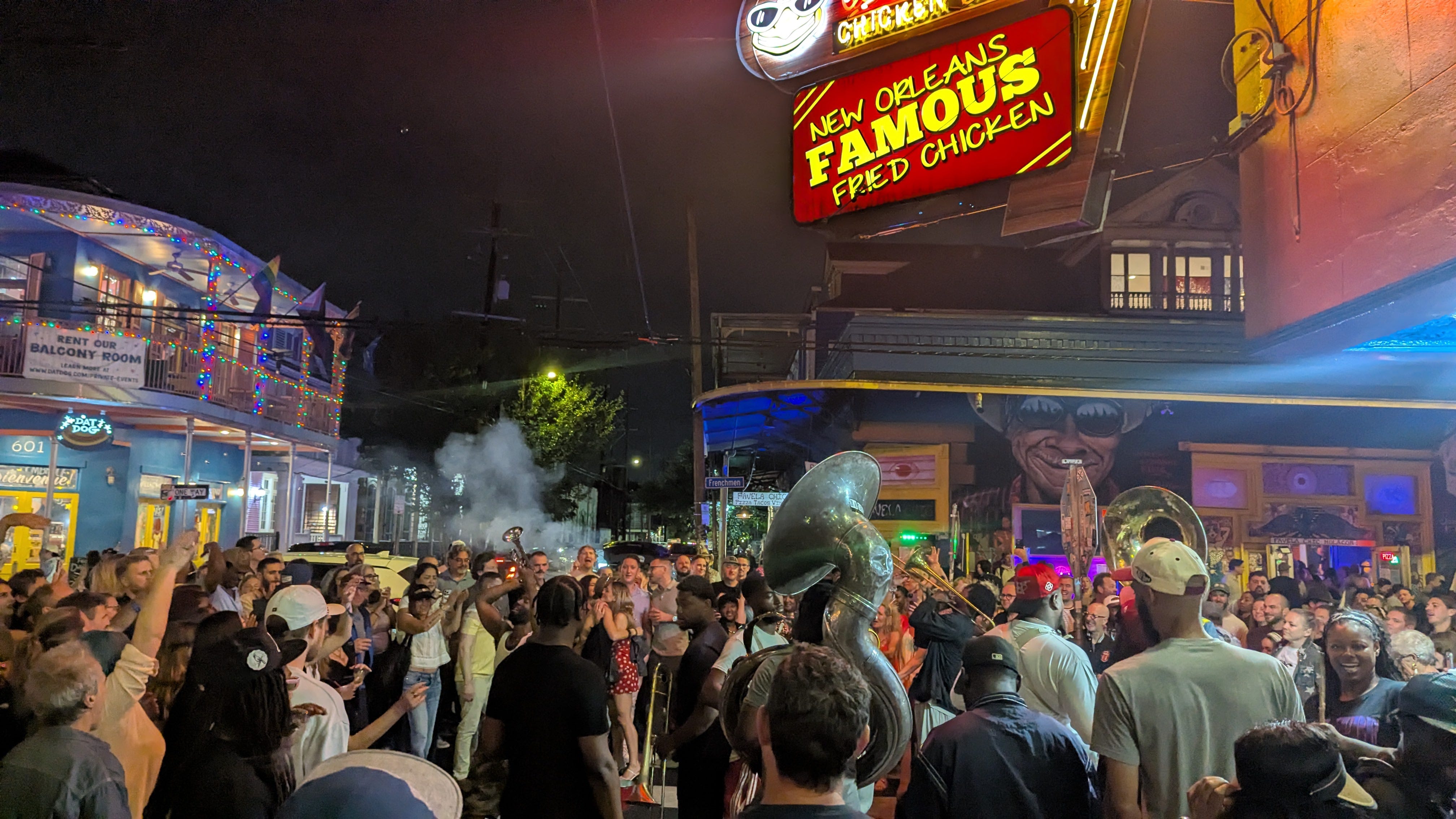
The moments of spontaneity could never happen anywhere else. I’ve loved New Orleans for a long time but “jazz fan” I don’t know if I would call myself. However I was transformed after I received an impromptu instrument lap dance/horn serenade of sorts from an (at least) 6-piece band playing at a bar on Frenchman Street. They pulled me to the front of their stage, sat me on a chair and blasted their horns and sang while a crowd screamed encouragement. Growing up I judged the kids in the marching band as dorks, compared to the more sophisticated members of the orchestra like myself, but in this moment I saw those instruments and their players in a different light. Aerophones can be sexy as hell.
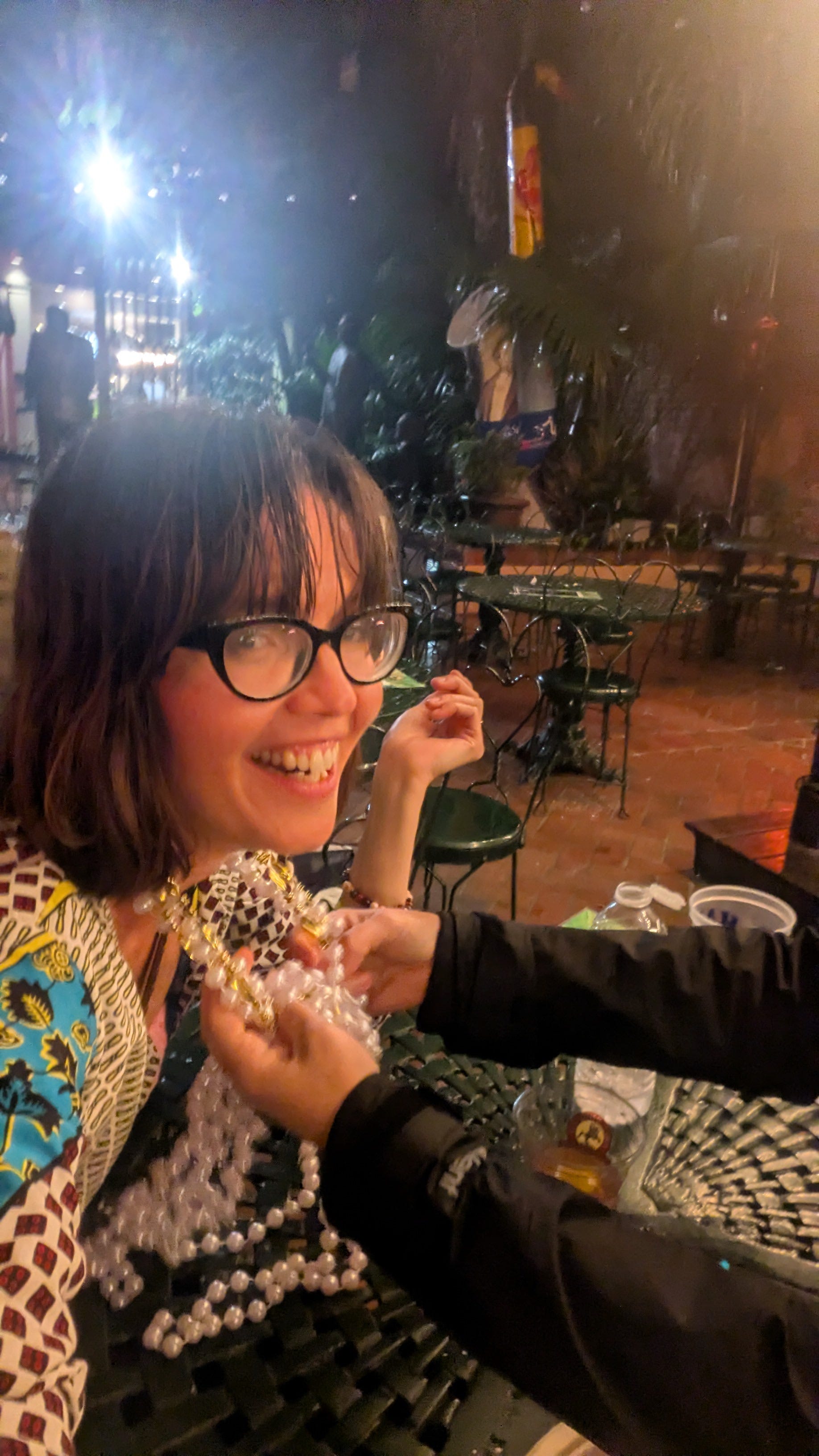
My girlfriends and I danced on balconies and people threw beads at me! Laura and I got thin green, gold and purple strands from a day parade below on Decatur Street.
Later that week as Ivey and I danced in the rain on the Bourbon Street balcony of Huge Ass Beer bar, a couple across the street on a different balcony sent fat pearly white beads flying. That night as we left Bourbon street, new women were dancing on the same balcony, and I did my best to throw my hard-earned beads to them. I’m better at catching than throwing.
On Friday Ivey and I drank Bloody Marys and ate deep fried devilled eggs on the wrap around porch of the Audobon Clubhouse, a country club by a beautiful park. The rain let loose in a way I’d never seen in New Orleans. As it poured off the roof in sheets it felt like a drizzly, dreamy day deep in dixieland, but then I thought about Katrina and how, if you know about New Orleans, you know the threat of storms are anything but picturesque. I remembered a steamboat cruise I took in 2023. On the way to Chalmet Battlefield, the tour guide broadcasted throughout the ship stories of the New Orleans’ colonial history. Then on the way back you could hear the history of Katrina. If you didn’t want to be reminded of the hurricane that killed over 1,000 people, you could sit inside the dining area where they muted the tale. At the Ogden Gallery of Southern Art last Saturday one of the labels said “Louisiana loses an area of land the size of a football field every 30 minutes to coastal erosion due to both man made intervention and natural disaster.”
This morning The Guardian published a story on how New Orleans will be fully underwater within the next century and I thought, as many do, ‘surely there must be a way to prevent this, especially in this city!’
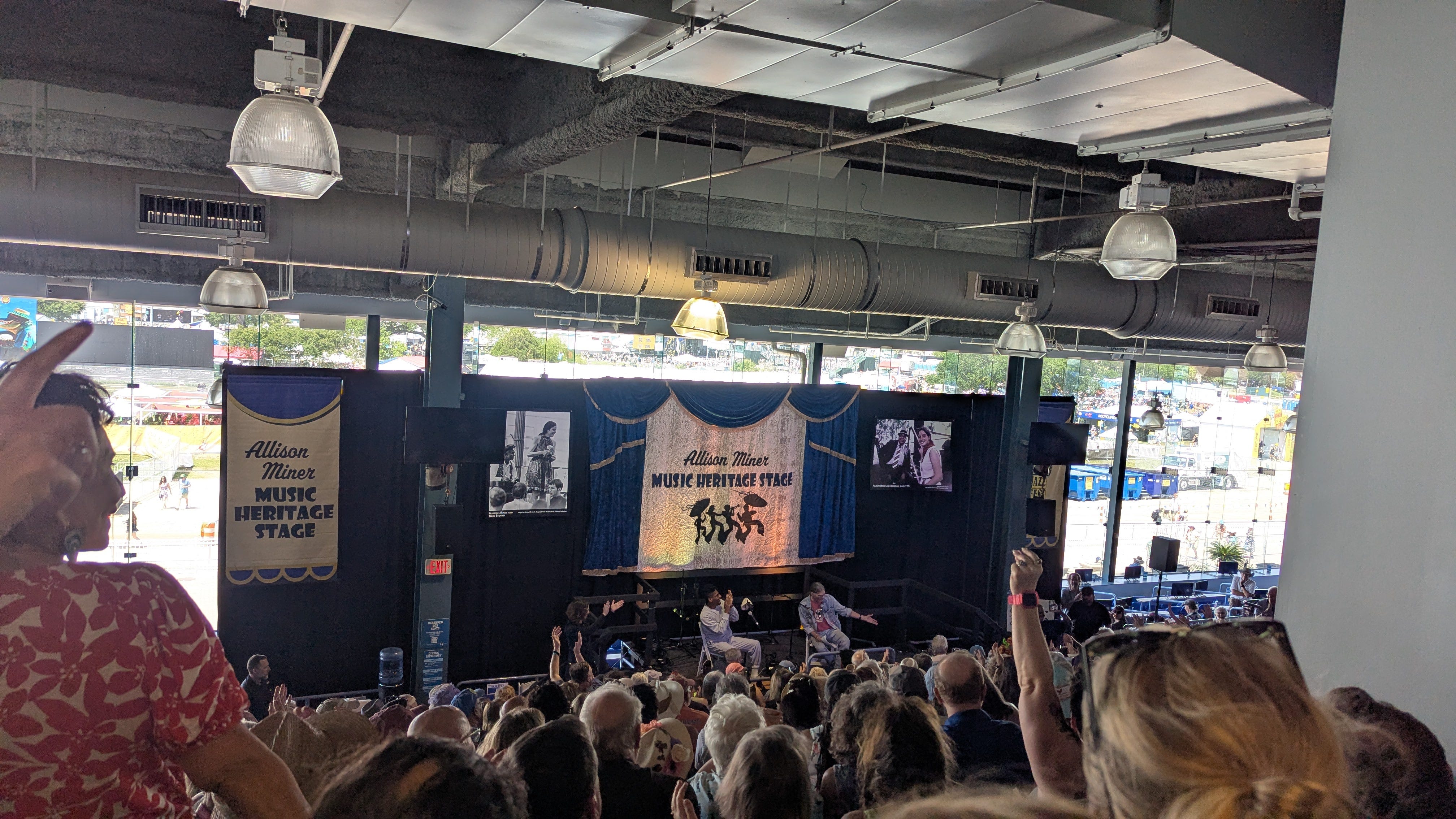
On the first day of Jazz Fest Jon Batiste talked with interviewer David Fricke of being from New Orleans and how it means both being rooted in ancestral traditions and also on the cutting edge. Jon spoke to the audience about how music and history are constantly evolving and becoming something new based on the old. “Nobody knows who originally wrote ‘St James Infirmary’,” he told us. I thought I didn’t know the song, but the next day at the Fest I heard New-Orleans-born Jazz singer Wendell Brunious introduce the song and realized that I did know it. I’d heard it many times in my life and could even sing along.
That’s what coming to New Orleans feels like, every time I return, like things are here that my heart knows even if my mind doesn’t. Like others who fall in love with this place, I feel a resilient beauty lies deeply in this sinking city. I want desperately to lift it up.
"compared to the more sophisticated members of the orchestra like myself”
wait a minute, what was that?
you were in an orchestra? what instrument did you play?
Wow . . beautiful article, I can hear the music and smell the cooking